
Table of Contents
The Aesthetics of Art Nouveau Theatres: Where Nature Met Modernity on Stage
The Art Nouveau movement (c. 1890-1910) emerged as a comprehensive stylistic rebellion against the historicism and academic rigidity of the 19th century. Seeking a new visual language for a new age, its proponents drew inspiration from the organic forms of the natural world, synthesizing them with modern materials and a unifying design philosophy. While the style manifested in everything from jewellery to metro entrances, its application to theatre architecture and design represents one of its most complete and spectacular triumphs. The Art Nouveau theatre was not merely a building for performance; it was itself a total work of art (Gesamtkunstwerk), an immersive aesthetic experience that began at the façade and culminated in the spectacle on stage.
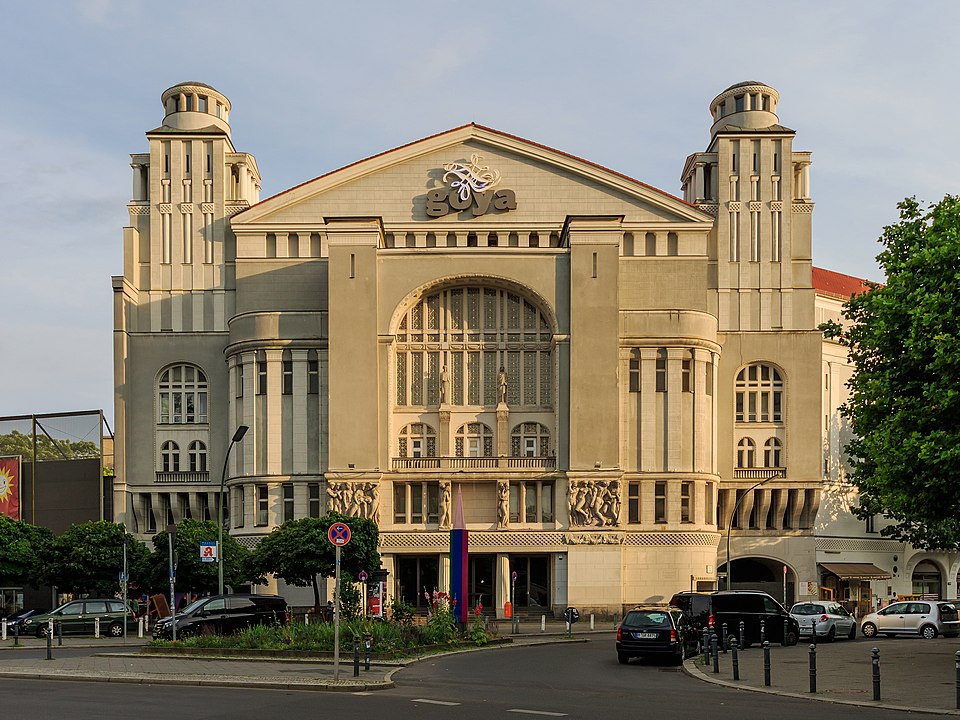
Image: By A.Savin – Own work, FAL, https://commons.wikimedia.org/w/index.php?curid=63473304
The Facade: A Curvilinear Prelude
The exterior of an Art Nouveau theatre served as a dramatic prologue to the wonders within. Rejecting the classical columns and pediments of traditional theatre design, architects employed flowing, asymmetrical lines that seemed to grow from the earth itself. Facades rippled with undulating stonework, wrought iron blossomed into floral gates, and mosaics shimmered with peacock feathers and feminine forms (the femme-fleur). A quintessential example is the Paris Métro entrances by Hector Guimard, which, while not theatres proper, functioned as theatrical portals to the city, their cast-iron orchid stalks setting the stage for an urban performance. For full-scale theatres, the design announced a break from tradition, promising an audience an escape into a realm of fluid beauty before they had even entered the lobby.
The Interior: An Immersive Organic Universe
Upon crossing the threshold, the patron was enveloped in a meticulously coordinated environment. The aesthetic principle of unity was paramount:
- Structural Morphology: Supports were transformed into natural elements. Columns stretched like tree trunks, branching out at the capitals to form vaulted ceilings resembling canopies of leaves or intricate spider webs. Staircases flowed like cascading water, with balustrades of carved wood or wrought iron mimicking tendrils and vines.
- Organic Ornamentation: Every surface offered a homage to nature. Wall stencils, plaster reliefs, and stained glass featured a lexicon of Art Nouveau motifs: lilies, irises, water lilies, dragonflies, butterflies, and peacocks. The whiplash curve, or coup de fouet, was the defining linear element, creating a sense of rhythmic, dynamic movement throughout the space.
- The Unity of Crafts: This was a collaborative endeavour. Architects like Victor Horta (Maison du Peuple, Brussels) and Ödön Lechner (Hungarian State Opera House, Budapest, though with stronger nationalist elements) worked closely with master craftsmen. Glassmakers, metalworkers, woodcarvers, and painters combined their skills to create seamless interiors where every fixture—from the door handles shaped like seed pods to the light fixtures resembling blossoming flowers—was part of the aesthetic whole.
The Auditorium: The Cultivated Garden of Spectacle
The heart of the theatre, the auditorium, focused this organic energy toward the stage. The proscenium arch, the frame for the performance, was often treated as a monumental piece of jewellery, encrusted with reliefs and curves. Ceilings might be painted with allegorical figures floating in a stylized, sky-like expanse, as seen in the Musical Theatre in Łódź by Adolf Zeligson.
Seating arrangements and balconies were designed with both aesthetics and modernity in mind. The use of new materials like exposed iron, famously employed by Horta, allowed for more slender supports and better sightlines, while also providing a canvas for intricate metalwork. The colour palette typically favoured earthy tones (mustards, olives, browns) complemented by metallics (gold, copper) and accents of muted green, peacock blue, and lilac, creating an atmosphere of subdued opulence that felt both luxurious and natural.
Beyond Architecture: Staging the New Art
The aesthetic extended to the ephemeral arts performed within these spaces. Stage design, posters, and programmes embraced the same principles. Alphonse Mucha’s iconic posters for Sarah Bernhardt at the Théâtre de la Renaissance captured the sinuous line and decorative elegance of the style, turning actresses into mystical, botanical deities. Stage sets for symbolist plays—such as those by Maurice Maeterlinck—often aimed to create moody, dreamlike environments that harmonized with the theatre’s own architecture, making the transition from house to stage fluid and coherent.
Legacy: The Fading Curtain Call
The outbreak of World War I and the rise of modernist functionalism largely extinguished the flame of Art Nouveau. Its theatres, however, remain as enduring monuments to a unique moment in cultural history. They represent a daring attempt to create a democratic, modern beauty rooted in nature, to soften the industrial age with organic form, and to elevate the act of theatre-going to a holistic aesthetic ritual. Today, preserved gems like the Karlsplatz Stadtbahn Station in Vienna or the Copenhagen Dagmar Theatre continue to enchant audiences, serving as permanent stages where the drama of line, light, and natural form performs an endless, captivating show.
In conclusion, the aesthetics of Art Nouveau theatres constituted a profound synthesis of art, craft, and nature. They were environments designed to awaken the senses, to transport the spectator into a refined, organic fantasy. More than just containers for drama, these buildings were active participants in the performance, their every curve and motif whispering of a world where beauty, derived from the natural realm, could shape and enhance every facet of modern life.

No responses yet