
Table of Contents
An Exploration of Moroccan Art
Moroccan art is a vibrant tapestry woven from the threads of diverse cultures and histories, reflecting the country’s unique position as a crossroads between Africa, Europe, and the Arab world. From the intricate geometric patterns of its Islamic architecture to the bold symbols adorning Berber textiles and the thought-provoking works of its contemporary artists, the artistic heritage of Morocco is both deeply rooted in tradition and dynamically engaged with the modern world. This essay explores the multifaceted dimensions of Moroccan art, tracing its historical foundations, examining its principal traditional crafts, and charting its evolution into the modern and contemporary eras.
| Artistic Domain | Key Characteristics & Forms | Cultural & Historical Significance |
|---|---|---|
| Historical Foundations | Minbars, muqarnas, zellige, stucco, monumental gates; fusion of Andalusian, Saharan, and Arab-Islamic influences. | Legitimized religious and political power under dynasties like the Almoravids, Almohads, and Merinids; established enduring decorative vocabularies. |
| The Art of Tazouaqt | Painted wood on ceilings, doors, and furniture; geometric patterns based on “Hasba” and “Qasma” principles, floral motifs (“Tawriq”), and natural pigments. | A defining characteristic of Moroccan architectural craftsmanship, particularly in cities like Fez and Marrakesh. |
| Berber (Amazigh) Arts | Silver and enamel jewelry (brooches, fibulae), textiles with symbolic motifs (diamonds, triangles), and ritual objects. | Expresses a pre-Islamic, indigenous identity; jewelry and tattoos functioned as markers of social status, protection, and carriers of metaphysical messages. |
| Modernist Movement | Easel painting, self-portraiture, abstraction, and critical engagement with colonial ideology; artists like Farid Belkahia, Jilali Gharbaoui, and Chaabia Tatal. | Marked a shift from utilitarian craft to individual artistic expression; sought to reclaim national identity and break from Orientalist and colonial representations. |
| Contemporary Scene | Multimedia installations, video art, performance, and critical conceptual practices; engagement with global discourses and local realities. | Navigates the complexities of globalization, cultural identity, and commercial pressures, while fostering a new ecosystem of galleries, foundations, and critique. |
Historical Foundations: A Confluence of Civilizations
The art of Morocco cannot be understood without acknowledging the profound historical forces that have shaped it. The country’s strategic location made it a meeting point for influences from Roman Africa, Islamic Spain (Al-Andalus), and sub-Saharan Africa. This synthesis became particularly pronounced from the 11th century onwards with the rise of powerful Berber dynasties. The Almoravids and later the Almohads, who built an empire stretching from Spain to North Africa, established a distinctive artistic vocabulary that would become the bedrock of Moroccan aesthetics. A paramount example of this early sophistication is the minbar (pulpit) commissioned by the Almoravid Sultan Ali ibn Yusuf for his mosque in Marrakesh. Begun in Cordoba around 1137, this masterpiece of woodwork and inlay exemplifies the high level of artistry achieved through the fusion of Andalusian and Maghrebi craftsmanship. Its intricate geometric patterns and carved panels were so prized that even when the conquering Almohads destroyed the original mosque, they preserved the minbar for their own new place of worship. This object alone demonstrates how art was not only a vehicle for religious expression but also a symbol of power and continuity, a national treasure that remains a testament to this shared heritage.
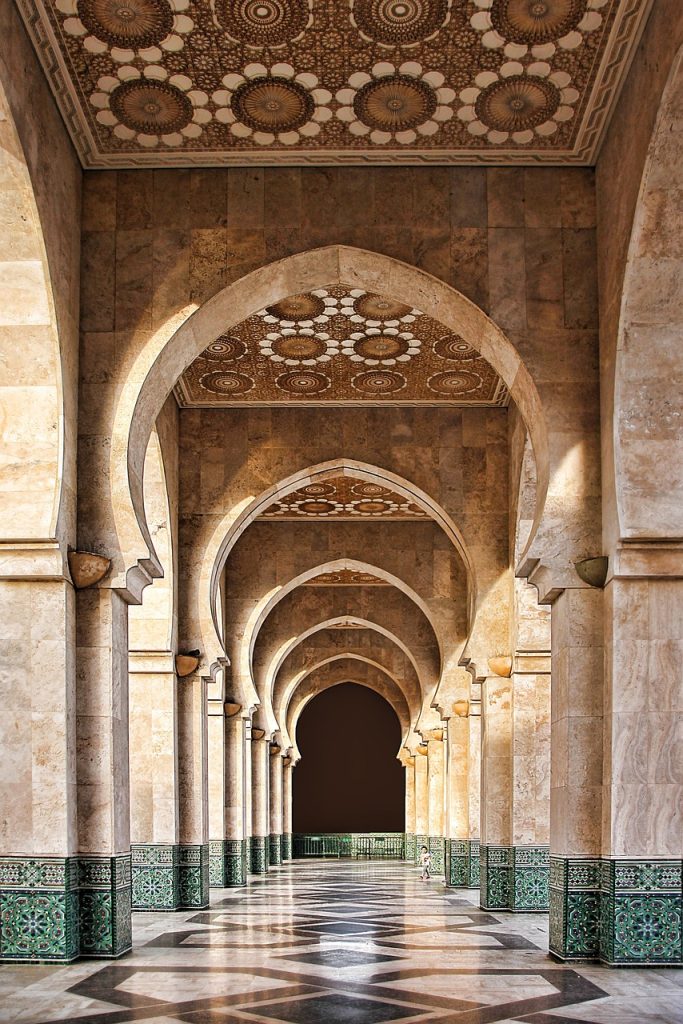
Following the Almohads, the Merinid dynasty (13th-15th centuries) further refined and expanded this artistic language, with their capital, Fez, becoming a dazzling center of art and learning. This period saw the maturation of key decorative arts that define Moroccan interiors to this day. The Merinids were prolific builders of madrasas (religious colleges), where zellige (geometric ceramic tilework), intricately carved stucco, and painted cedar wood ceilings were combined to create spaces of profound beauty and harmony. The art of muqarnas (stalactite-like vaulting), inspired by eastern Islamic traditions, was perfected to create dazzling, three-dimensional ceiling domes that seem to defy material logic. It was during this era that the classical repertoire of Moroccan ornament—a complex interplay of geometric frameworks, arabesque floral motifs, and flowing calligraphy—was codified, laying the groundwork for centuries of artisans to come.
The Enduring Legacy of Traditional Crafts
For much of its history, Moroccan “art” was synonymous with the production of exquisitely crafted utilitarian objects. As scholar Moulim El Aroussi notes, the sources of Moroccan visual art are deeply rooted in the work of craftsmen who created objects for everyday use, imbuing them with beauty and symbolic meaning long before the concept of “easel painting” for pure contemplation existed. This rich material culture is typically divided into several key domains.
Textiles, Jewelry, and Adornment are perhaps the most personal forms of artistic expression. Weaving and embroidery traditions vary dramatically between urban centers like Fez and Chefchaouen, known for their refined silk embroideries, and the rural, tribal communities of the Atlas Mountains and the Sahara. Amazigh (Berber) textiles, often woven by women on traditional looms, are not merely functional; they are encoded with symbols and motifs that speak of identity, protection, and beliefs. These motifs—diamonds, triangles, and zigzags—often echo those found in temporary tattoos applied with henna during ceremonies, creating a visual language that connects body, garment, and dwelling. Similarly, Amazigh jewelry, crafted primarily in silver, is a powerful marker of social status and ethnic identity. Large, enameled fibulae (tizerzai) were not just clasps for clothing but also served as portable wealth and talismans, believed to offer protection from harm. The techniques and styles, from the amber-studded pieces of the south to the enamelwork of the Middle Atlas, showcase a remarkable diversity within a shared cultural framework.
The architectural crafts of woodwork, metalwork, and ceramics form the sensory backdrop of Moroccan life. The art of Tazouaqt, or traditional painted wood, is a prime example, transforming structural elements into canvases of vibrant color and precise geometry. The zawwaqa (artisan painters) of Fez, Marrakesh, and Chefchaouen employ codified rules of composition, such as “Hasba” and “Qasma,” to construct complex geometric patterns that can range from simple borders to intricate star formations covering entire ceilings. Using natural pigments like indigo, henna, and paprika, mixed with binders like skin glue, and applying them with handmade brushes of donkey hair, these craftsmen perpetuate techniques passed down through generations. This same geometric and floral vocabulary appears in other media: chiseled into brass and copper to create intricate trays and lanterns, and assembled into the countless fragments of zellige that pave fountains and walls with a mosaic of color. The tradition of Moroccan leatherwork, centered in the tanneries of Fez, produces the iconic dyed leathers used for slippers (babouches) and pouffes, while regional pottery centers like Safi and Fes each maintain distinct styles of glazed and unglazed ceramics.
The Birth of Modernism: From Craft to Easel Painting
The arrival of the 20th century and the rise of the modernist movement marked a profound shift in the conception of art in Morocco. The transition was catalyzed by the presence of Orientalist painters from Europe, beginning with Eugène Delacroix in 1832. These artists were drawn to Morocco, which they perceived as a “virgin land” untouched by modernity, and they painted its landscapes, people, and customs, often through a lens of exoticism and fantasy. While their work presented a skewed, colonial perspective, it also introduced the medium of easel painting to a Moroccan audience. In some cases, Moroccans who worked as servants or assistants to these European painters, such as Mohamed Ben Allal who assisted the French painter Jacques Azema, were encouraged to pick up the brush themselves, giving rise to a generation of “naïve” or self-taught artists who painted the world around them in a fresh, untutored style.
The true birth of a conscious Moroccan modernist movement, however, came in the years leading up to and following independence (1956). A new generation of artists, many of whom had studied in Europe, returned to Morocco with a mission to forge a national art that was both modern and authentically Moroccan. Figures like Farid Belkahia, Jilali Gharbaoui, and Mohamed Chebaa rejected the picturesque exoticism of the Orientalists and sought to break from the colonial gaze. Belkahia’s symbolic act of painting a self-portrait in 1953 was a declaration of artistic individuality at a time of national struggle. As art critic Toni Maraini explains, these artists embarked on a “long circular journey,” discovering that the abstract and expressive power they admired in modern Western art was also present in their own neglected traditions—in the geometry of a carpet, the symbolism of a tattoo, or the abstraction of Islamic ornament. They sought to revalue the “essence” of these forms, translating them into the language of modern painting and sculpture, thus decolonizing their artistic heritage and claiming its place within a universal modernist discourse.
Contemporary Art in a Globalized World
Today, the Moroccan art scene is a dynamic and complex field, navigating the pressures and opportunities of globalization. The pioneering spirit of the 1960s and 70s has evolved into a multifaceted contemporary practice. Artists now work in a variety of media, including video, installation, and performance, engaging with global artistic discourses while remaining grounded in local realities. However, this evolution has not been without its challenges. The art market has expanded dramatically with the advent of auction houses in the early 2000s, creating new financial value for art but also raising concerns about the dominance of market trends over artistic quality and critical thought. Critics like Mohamed Rachdi warn that the market now often dictates what is considered valuable, sometimes favoring a new kind of “neo-exotic” work that caters to commercial tastes, echoing the very Orientalist clichés the modernists fought against.
Despite these pressures, the Moroccan art world is sustained by a network of serious galleries, private foundations (such as those established by banks and corporations), and a new generation of critically engaged artists and writers. There is a concerted effort to document and preserve this artistic history, from the work of the modernists to the traditional crafts. Institutions like the National Museum of Adornment in Rabat, housed in a restored historic fort, and the ongoing efforts of associations dedicated to reviving embroidery and weaving, demonstrate that the legacy of the mu’allima (expert teacher) and the traditional artisan remains vibrantly alive. These initiatives work alongside contemporary artists who continue to ask pertinent questions about identity, history, and society, ensuring that Moroccan art, in all its forms, remains a vital and evolving field of cultural production.
Conclusion
The story of Moroccan art is one of continuous synthesis and reinvention. It is an art born at a crossroads, absorbing the influences of Andalusia, Africa, and the Arab East, and transforming them into something uniquely its own. This is evident in the timeless geometry of its ancient minbars and zellige, the symbolic language woven into a Berber rug, and the intellectual rigor of a contemporary installation. From the sacred spaces of mosques and madrasas to the intimate confines of the home and the public sphere of the gallery, Moroccan art serves as a powerful record of the nation’s history, beliefs, and creative spirit. As it moves forward, it continues to navigate the delicate balance between honoring a rich and multifaceted past and staking its claim in the globalized cultural landscape of the future.

No responses yet