
Table of Contents
A Tapestry of Tresses: Tracing the Cultural History of Long Hair
The question of when long hair became popular is not one with a singular answer. Unlike a technological invention with a clear patent date, the popularity of long hair is a cyclical, culturally contingent, and deeply symbolic phenomenon. Its status has waxed and waned across millennia, shifting between genders, classes, and ideologies. To explore its “popularity” is to trace a thread through the fabric of human social, religious, and aesthetic history. This essay will chart that journey, from ancient symbolisms to modern rebellions, demonstrating that long hair’s popularity is always a reflection of its time.
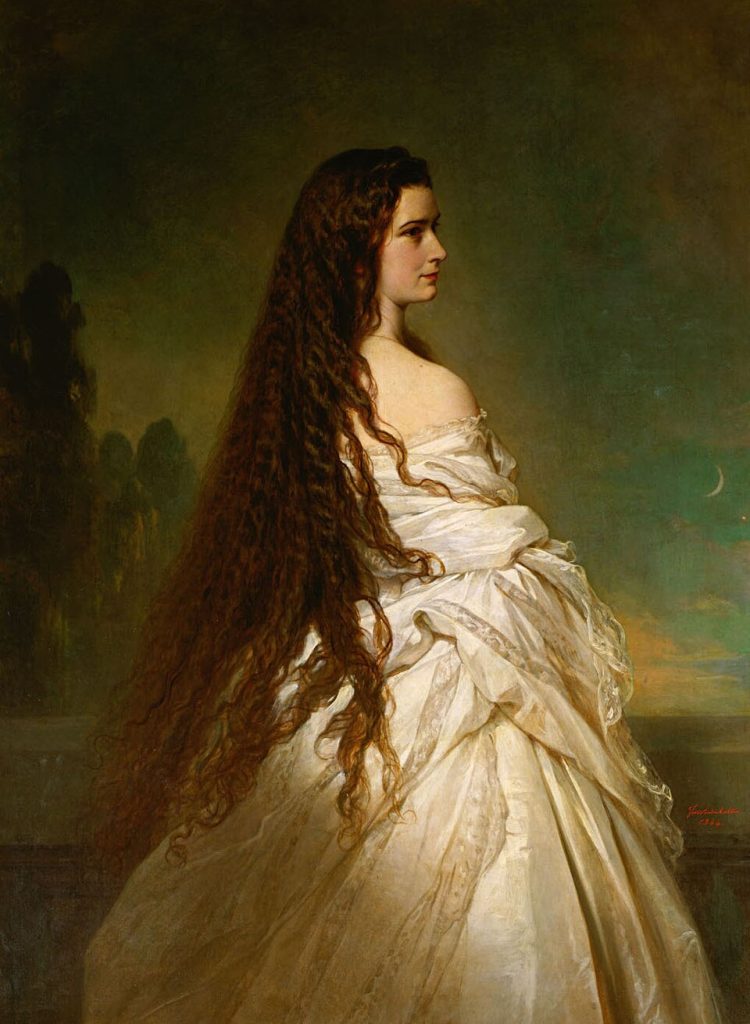
Photo: By Franz Xaver Winterhalter – Kunsthistorisches Museum Wien, Bilddatenbank., Public Domain, https://commons.wikimedia.org/w/index.php?curid=1849397
I. Antiquity & Early Civilizations: The Primordial Symbol of Power and Sanctity
In the ancient world, long hair was rarely a mere fashion choice; it was a potent signifier, often popular among elites and deities.
- Divine and Royal Authority: In Mesopotamian and Egyptian art, gods and pharaohs were depicted with elaborate, styled long hair or wigs (like the nemes headdress), symbolizing divine power and eternal life. The Biblical story of Samson, whose strength resided in his uncut hair, encapsulates a widespread belief in hair as a source of vital power (potentia).
- Greek Idealism and Roman Ambivalence: For ancient Greeks, long, flowing locks on men (as seen in statues of kouroi or Achilles) represented youthful heroism, freedom, and aristocratic status. The Romans inherited a more complex view. Early Romans associated long hair with “barbarian” tribes like the Gauls and Germans. Roman citizens typically wore shorter hair, associating it with order and discipline, though elite women wore elaborate long styles as a sign of beauty and social standing.
- Eastern Philosophies: In many Dharmic traditions (Hinduism, Buddhism, Sikhism) and among some Taoist and Buddhist monks, uncut hair (jata or kesh) represents spiritual devotion, a renunciation of vanity, and a respect for the natural, God-given form. Here, its “popularity” was spiritual and mandated.
In this era, long hair was popular not as a trend but as an institutionalized marker of power, sanctity, or ethnic identity.
II. The Middle Ages to Baroque: Gender, Piety, and Extravagance
The medieval and Renaissance periods saw long hair’s popularity bifurcate sharply along gender and class lines in the West.
- Chivalric and Royal Men: During the High Middle Ages (12th-13th centuries), aristocratic knights and kings often wore their hair long as a symbol of nobility and martial virility. However, the Church frequently condemned this as vanity, promoting shorter styles for laymen and tonsures for clerics as a sign of humility.
- The Feminine Ideal: For women, long hair was overwhelmingly the norm—a non-negotiable element of beauty and femininity. It was almost always covered in public after marriage (with wimples, crespines, or hoods), becoming a private asset for a husband. To cut a woman’s hair was a severe punishment or act of humiliation.
- Renaissance and Baroque Excess: The 16th and 17th centuries saw long hair reach new heights of elaborate popularity among European elites of both sexes. The courts of Louis XIII and Louis XIV made enormous, powdered wigs (periwigs) and long, flowing natural hair for men the ultimate symbols of aristocratic status, separating the nobility visibly from the short-cropped commoners. This was long hair as performance art, denoting absolute privilege.
Here, popularity was dictated by courtly fashion and rigid gender roles, reaching an apogee of artifice in the Baroque period.
III. The Great Shift: The 18th-19th Century and the Masculine Short Hair Standard
A dramatic reversal began in the late 18th century, fundamentally reshaping hair’s gendered popularity.
- The Neoclassical and Republican Influence: Inspired by the democratic ideals of Republican Rome and the French Revolution, men rejected the ancien régime’s wigged extravagance. Short, natural hair (like the Brumaire cut) became associated with reason, sobriety, and revolutionary zeal. The rise of the professional, industrialized middle class in the 19th century cemented this: short hair was practical, disciplined, and modern.
- The Victorian Feminine Cascade: For women, long hair remained the unchallenged ideal, now imbued with notions of purity, domesticity, and erotic mystery (the “angel in the house” with a hidden cascade of tresses). Pre-Raphaelite paintings glorified long, flowing red hair as the pinnacle of ethereal beauty.
- Counter-Currents: Certain male subcultures, like the Romantic poets or later 19th-century intellectuals and artists, sometimes wore longer hair to signal their rejection of bourgeois norms, presaging the countercultural movements to come.
This era established the modern Western baseline: short hair as the popular, default standard for men; long hair as the mandatory standard for women.
IV. The 20th Century: Rebellion, Liberation, and Fragmentation
The 20th century dismantled these Victorian norms, making long hair’s popularity a key battleground for social change.
- The 1920s Female Rebellion: The flapper’s bob cut was a seismic shock. For the first time, women publicly and fashionably cut their hair short, symbolizing emancipation, androgyny, and a break from Victorian constraints. Long hair temporarily lost its absolute hold on feminine popularity.
- The 1960s-70s Countercultural Explosion: This was the most iconic moment for the modern popularization of long hair on men. Inspired by Beatniks, the Beatles’ mop-tops, hippies, and anti-war activists, long hair became the global symbol of rebellion against the “establishment”—rejecting the short-haired, corporate, militaristic ideal. It signaled solidarity with feminists (who were also often choosing to wear their hair long and natural), and identification with “natural” living and rock ‘n’ roll ethos. For women, long, natural hair (eschewing the teased styles of the 50s) similarly represented a rejection of rigid, patriarchal beauty standards.
- Punk, Metal, and Subcultural Codification: In the late 70s and 80s, long hair was adopted and transformed by subcultures. For heavy metal and hard rock fans, it became a tribal badge, a sign of hedonism and outsider identity. Punk, while often favoring short, dramatic cuts, played with Mohawks and dyed colors, further making hair a medium for statement.
In this century, long hair’s popularity became explicitly ideological, charged with meanings of rebellion, youth identity, and social change.
V. The 21st Century: The Age of Choice and Fluidity
Today, the popularity of long hair is characterized by unprecedented individual choice and the erosion of fixed gendered meanings.
- The Erosion of Gendered Coding: Men with long hair are commonplace, from actors and athletes to tech entrepreneurs. It is no longer automatically a radical statement but a personal aesthetic choice. Similarly, women move freely between long, short, and every length in between without major social stigma.
- The Influence of Social Media and Nostalgia: Platforms like Instagram and TikTok have democratized and fragmented trends. “Cottagecore” aesthetics romanticize long, flowing hair, while other trends promote shaved sides or bold cuts. Long hair styles from various decades (70s boho, 90s grunge) are revived in cyclical nostalgia waves.
- Cultural Appreciation vs. Appropriation: The popularity of styles like braids, locs, and cornrows, particularly when worn by non-Black individuals, has sparked critical conversations about the difference between appreciation and appropriation, highlighting how hair remains deeply tied to ethnic identity and history.
Modern popularity is pluralistic. Long hair is one option in a vast menu, its meaning personalized rather than universally dictated.
Conclusion: An Ever-Evolving Strand
Long hair has never been universally or continuously “popular.” Instead, its stature has oscillated, serving as a canvas upon which societies paint their values: power in antiquity, class in the Baroque, gender in the Victorian age, rebellion in the 1960s, and individual identity today. Its popularity is never neutral; it is always in dialogue with the social and political currents of its time. From Samson to the Beatles, from Cleopatra to the Instagram influencer, the story of long hair is, ultimately, the story of humanity’s evolving search for meaning, identity, and expression through the most malleable part of our bodies. As long as culture continues to change, the significance of the tress will continue to be woven and rewoven.

No responses yet