
Table of Contents
The Luminous Craft: An Exploration of the Art of Lamp-Making
Introduction: More Than Illumination
From the primordial flicker of a clay oil lamp in an ancient hearth to the sleek LED matrix of a modern smart fixture, the lamp has been a constant companion to human civilization. Yet, it represents far more than a mere functional object designed to banish darkness. Lamp-making is a profound and multifaceted art form—a confluence of design, materials science, storytelling, and ergonomics. It is the art of sculpting with light itself, where the creator must consider not only the vessel but the quality of the illumination it emits. This essay delves into the rich tapestry of this craft, exploring its historical roots, its diverse materials and techniques, its philosophical dimensions, and its evolving future.
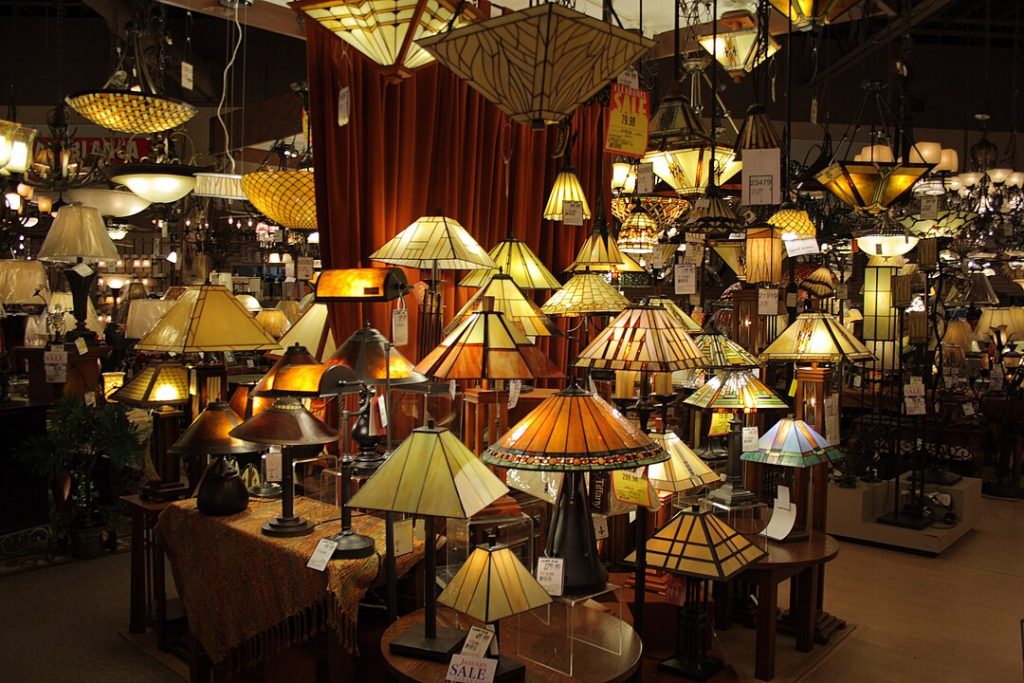
Image: By Ragesoss – Own work, CC BY-SA 4.0, https://commons.wikimedia.org/w/index.php?curid=3529380
I. Historical Luminescence: A Brief Journey Through Time
The history of lamp-making is a chronicle of human ingenuity. The earliest lamps, dating back over 15,000 years, were simple hollow stones or shells that held animal fat and a fibrous wick. The Classical Era saw the refinement of the oil lamp in terracotta and bronze, often adorned with mythological motifs, becoming both a household item and a sacred object.
The Middle Ages brought the candleholder to prominence, with wrought iron and cast brass examples showcasing the blacksmith’s art in cathedrals and castles. The 19th century, however, heralded a revolution with gas and finally, electric light. This technological leap liberated designers from the constraints of open flames and smoke. Artists of the Art Nouveau movement, like Louis Comfort Tiffany, transformed lamps into organic, stained-glass masterpieces, while the Bauhaus school later championed functional, geometric forms. Each era’s lamps are cultural artifacts, reflecting available technologies, social structures, and prevailing aesthetic ideals.
II. The Maker’s Palette: Materials and Techniques
The lamp-maker’s art begins with a dialogue between material and intent. Each medium offers unique possibilities and challenges.
- Glass: The most alchemical of materials. Techniques are vast:
- Blown Glass: Allows for fluid, organic forms; the glassblower must work with heat and gravity to create shades or bases of breathtaking delicacy.
- Stained & Leaded Glass: Involves cutting colored glass, wrapping edges in copper foil or lead came, and soldering them into pictorial or abstract panels, as perfected by Tiffany.
- Fused/Slumped Glass: Uses kilns to melt and shape glass into seamless, modern forms.
- Metal: Provides structure, weight, and often a conductive path for electricity. Techniques include:
- Metalworking: Forging, bending, and welding steel, brass, or copper into frameworks.
- Casting: Pouring molten metal like bronze or aluminum into molds for intricate, repetitive forms.
- Finishing: Patination, polishing, powder-coating, or plating to achieve the desired luster and protection.
- Ceramic & Pottery: Offers a tactile, earthy quality. Wheel-thrown, slab-built, or slip-cast forms are bisque-fired, glazed, and then fired again. The glaze chemistry itself can become a quest for the perfect luminous surface, from matte to high-gloss.
- Natural & Reclaimed Materials: Wood (turned or carved), stone, paper (in traditional shoji and lampshades), textiles, and even repurposed objects. This domain highlights sustainability and the beauty of inherent texture.
Beyond the primary material, the artisan must master electrical integration—safely routing cords, selecting sockets, switches, and most critically, choosing the appropriate light source (bulb), which dictates the lamp’s final character: warm or cool, focused or diffused.
III. The Philosophy of Light: Design Beyond the Object
Great lamp-making transcends craft; it is applied philosophy. Several key principles guide the artist:
- Form & Function Synergy: A Bauhaus maxim, but universal. The shape must facilitate the lamp’s purpose—reading, ambient mood, accent lighting—without compromise. The switch should be intuitive, the bulb accessible, the light directed where needed.
- The Dialogue of Shadow and Light: A lamp-maker sculpts illumination and, by extension, shadow. A perforated metal shade creates dappled patterns; a dense ceramic base throws a dramatic silhouette. The art lies in controlling this interplay.
- Emotional Resonance: Light is deeply psychological. A lamp can evoke comfort (a warm, low-wattage glow in a den), vitality (a bright, colorful piece in a studio), or serenity (a soft, paper-lantern diffused light). The maker engineers an emotional experience.
- Material Honesty: This principle advocates for letting materials speak for themselves—the grain of wood, the fluidity of glass, the rigidity of iron—rather than forcing them to imitate something else.
IV. The Creative Process: From Spark to Luminescence
The journey of creation is methodical yet requires inspiration.
- Concept & Inspiration: Drawn from nature, architecture, history, or abstract concepts.
- Design & Drafting: Sketches, technical drawings, and now 3D models, considering scale, proportions, and ergonomics.
- Material Selection: Choosing materials that align with the design intent, budget, and structural needs.
- Prototyping & Fabrication: The hands-on stage of shaping, joining, and assembling. This is often an iterative process of adjustment.
- Finishing & Electrical Fitting: Applying final surfaces and meticulously installing all electrical components to safety standards.
- Testing & Reflection: The first illumination. Does the light behave as envisioned? Is the effect magical? This is the moment of truth for the lamp-maker.
V. The Contemporary Glow: Art, Technology, and Sustainability
Today’s lamp-making landscape is vibrantly diverse.
- The Art Lamp: Many lamps are one-off or limited-edition sculptures, showcased in galleries, blurring the line between utilitarian object and pure art.
- Technological Integration: Smart lamps featuring color-changing LEDs, wireless charging, voice control, and app connectivity are a new frontier, demanding that makers collaborate with technology.
- The Sustainability Imperative: A dominant trend focuses on eco-friendly materials (bamboo, recycled metals/glass), energy-efficient LEDs, and designs for disassembly and longevity, countering disposable culture.
Conclusion: An Enduring Radiance
The art of lamp-making is a testament to humanity’s desire to shape our environment, not just for utility, but for beauty and meaning. It is a discipline that demands the hand of a craftsperson, the eye of a designer, and the soul of a poet. In a world often too brightly and uniformly lit by sterile overhead fixtures, the handmade lamp reclaims light as an intimate, personal experience. It creates a pool of warmth that gathers people, defines a space, and offers solace.
As we move forward, this ancient art will continue to evolve, embracing new technologies and ethics, but its core mission will remain unchanged: to master not just the source of light, but the very quality of darkness it dispels. In the end, the lamp-maker offers a humble, profound gift—the power to shape the light by which we live our lives.

No responses yet