
Table of Contents
Introduction: Defining Iconoclasm
Iconoclasm, derived from the Greek eikon (image) and klastes (breaker), refers to the deliberate destruction of religious or political images, icons, and symbols. Throughout history, iconoclastic movements have arisen from theological, political, and social motivations, fundamentally altering the trajectory of visual culture. Far from being mere acts of vandalism, iconoclastic episodes represent profound cultural shifts—moments when societies redefine the boundaries of representation, belief, and power. This essay examines the major historical waves of iconoclasm, their underlying ideologies, and their lasting influence on artistic production, aesthetics, and the very philosophy of art.
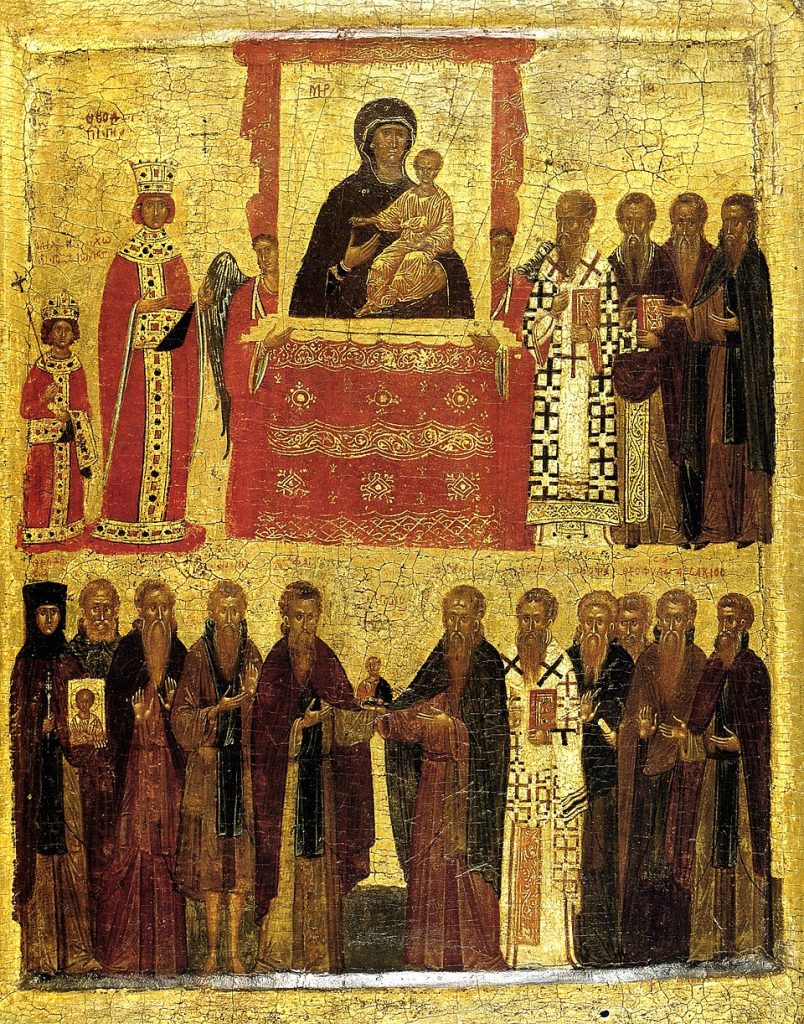
Image: By anonymous – National Icon Collection (18), British Museum, Public Domain, https://commons.wikimedia.org/w/index.php?curid=7306236
Theological Foundations: The Byzantine Iconoclasm
The first major organized iconoclastic movement emerged in the Byzantine Empire during the 8th and 9th centuries. Sparked by Emperor Leo III in 726 CE, Byzantine Iconoclasm was rooted in a strict interpretation of the Second Commandment’s prohibition against graven images. Iconoclasts argued that religious images constituted idolatry, blurring the distinction between the created and the divine. They held that Christ, as God incarnate, could not be circumscribed by human-made images.
The consequences for art were immediate and severe: mosaics were stripped from churches, icons burned or whitewashed, and religious artists persecuted. Yet, this period also spurred profound theological and artistic reflection. Iconophiles, led by figures like John of Damascus, developed sophisticated defenses of icons, arguing they served as windows to the divine, aids to veneration, and essential tools for teaching the illiterate.
The eventual triumph of the iconophiles in 843 CE (celebrated as the “Triumph of Orthodoxy”) did not simply restore the status quo. It established a theological framework for sacred art in Eastern Christianity that emphasized transcendental symbolism over naturalism, leading to the highly formalized, hieratic style of Byzantine icons that persists to this day. Paradoxically, iconoclasm forced a clarification of art’s purpose, cementing its role as a mediator of the sacred.
Reformation and Revolution: Protestant Iconoclasm in Northern Europe
The 16th-century Protestant Reformation ignited a second major wave of iconoclasm, particularly in regions influenced by Calvinism and Zwinglianism. Reformers like Ulrich Zwingli and John Calvin revived iconoclastic arguments, viewing Catholic visual culture—statues of saints, stained glass, altarpieces—as superstitious distractions from the pure word of Scripture. The resulting “Bildersturm” (image storm) saw the systematic cleansing of churches across Switzerland, the Netherlands, Germany, and England.
This destruction was not merely negative; it was a creative act of religious purification that gave birth to new aesthetic paradigms. Stripped of narrative and devotional art, Protestant churches emphasized architecture, light, and empty space, fostering an atmosphere of individual contemplation.
This shift redirected artistic energy and patronage toward secular genres: portraiture, landscape, still life, and genre painting flourished in the Dutch Golden Age as artists found new markets among the rising merchant class. The moralizing domestic scenes of Vermeer or the meticulous still lifes of Willem Claesz Heda, filled with symbolic vanitas, can be seen as indirect legacies of iconoclasm—art turned inward, examining the material world and human condition rather than the sacred narrative.
Political Iconoclasm: The French Revolution and Modern State Power
Iconoclasm took a decidedly political turn in the modern era. The French Revolution (1789–1799) witnessed the systematic destruction of royal, feudal, and religious symbols: statues of kings were toppled, fleurs-de-lis chiseled from buildings, and churches repurposed as “Temples of Reason.” This was iconoclasm as popular sovereignty in action, using the destruction of old symbols to materialize the birth of a new political order. The revolutionaries understood that to control memory and legitimacy, one must control the visual landscape.
This politicized iconoclasm became a recurring feature of modern revolutions and regime changes. The fall of the Berlin Wall (1989), the toppling of Saddam Hussein’s statue in Baghdad (2003), and the removal of Confederate monuments in the United States (21st century) are all acts in this tradition.
They demonstrate how iconoclasm serves as a performative tool for enacting political change, a literal breaking of the old regime’s visual authority. Such acts force societies to confront uncomfortable questions: Which histories are memorialized? Who has the right to erase? In response, contemporary art has increasingly engaged with themes of memory, erasure, and counter-monumentality, as seen in the works of artists like Krzysztof Wodiczko or Doris Salcedo, who create art that critiques or recontextualizes public symbols.
The Avant-Garde and Auto-Iconoclasm: Art Turning Against Itself
A unique 20th-century phenomenon is what might be termed “auto-iconoclasm”—the avant-garde’s deliberate attack on artistic conventions themselves. Movements like Dada, with their anti-art stance, sought to demolish the bourgeois institutions and aesthetics of traditional art. Marcel Duchamp’s readymades, for instance, were iconoclastic gestures that challenged definitions of authorship, skill, and aesthetic value.
This conceptual iconoclasm expanded art’s boundaries while destabilizing its foundations. It led to a pervasive self-criticality in modern and postmodern art, where questioning the medium, the museum, and the market became central artistic concerns. The destructions of the Russian avant-garde, the defacements of the Situationist International, and even the literal shredding of artworks (e.g., Banksy’s “Love is in the Bin”) continue this tradition. The influence here is philosophical: art became less about creating enduring objects and more about instigating critical thought, a process-oriented practice forever questioning its own legitimacy.
Digital Age Iconoclasm: Memes, Erasure, and Virtual Space
In the contemporary digital landscape, iconoclasm has taken new, virtual forms. Digital tools allow for the easy manipulation, defacement, or “canceling” of public images. Meme culture engages in a form of decentralized iconoclasm, rapidly appropriating and subverting iconic imagery for satire or critique. The hacking of websites, the digital vandalism of NFTs, and the deepfake alteration of political figures represent new frontiers of iconoclastic activity.
This digital iconoclasm democratizes the act of image-breaking but also raises profound questions about truth, authenticity, and the fragility of digital heritage. Artists like Hito Steyerl explore how digital images circulate, degrade, and become weaponized. The ease of digital replication and destruction challenges traditional notions of the unique art object, pushing contemporary art further toward the conceptual and the ephemeral.
The Creative Paradox: How Destruction Shapes Creation
The most profound influence of iconoclasm on art may be dialectical: the destruction of images invariably stimulates new forms of creation. This manifests in several ways:
- The Aesthetics of Absence and Trace: Iconoclasm leaves behind fragments, empty niches, and scars. Contemporary artists are deeply drawn to these traces. Anselm Kiefer’s charred, leaden canvases or Rachel Whiteread’s casts of negative space evoke memory and loss, giving form to absence in ways directly informed by the iconoclastic void.
- The Rise of the Abstract and Non-Representational: The Protestant suspicion of religious imagery contributed, over centuries, to an environment where art could be divorced from direct representation. While not a straight line, the path from emptied Calvinist churches to the abstract spirituality of Wassily Kandinsky or the minimalist purity of Agnes Martin is perceptible. When the figure is forbidden or problematic, art turns to the formless, the geometric, or the conceptual.
- Art as Critique and Resistance: In an age aware of iconoclasm’s power, art often preemptively incorporates critique. It becomes self-effacing, ironic, or participatory to avoid becoming a static target for ideological attack. Institutional critique, from Hans Haacke to Theaster Gates, operates as a sanctioned, internalized iconoclasm, challenging power structures from within the artistic system.
Conclusion: The Unending Dialogue
Iconoclasm is not a historical aberration but a recurring feature of human engagement with images. It reveals that art is never neutral; it is always entangled with power, belief, and identity. The influence of iconoclastic movements is therefore not merely a record of loss but a dynamic force in art’s evolution.
By periodically shattering existing visual orders, iconoclasm forces renewal, compels new justifications for art, and opens spaces for alternative expressions. From the abstracted forms of Byzantine mosaics to the conceptual provocations of the avant-garde, the shadow of the iconoclast has shaped art’s path, ensuring that the dialogue between creation and destruction, image and its prohibition, remains at the heart of our visual culture. In understanding iconoclasm, we understand not just what art has been destroyed, but more importantly, what art has been forced to become.

No responses yet