
Table of Contents
What is Hybrid Art? The Aesthetics of Fusion in a Post-Digital Age
Introduction: Beyond Categories
In the sprawling landscape of contemporary art, a term has steadily gained prominence, acting as both a descriptor and a manifesto: Hybrid Art. It signifies more than just a stylistic choice; it represents a fundamental shift in artistic philosophy, methodology, and reception. At its core, hybrid art is the deliberate and sophisticated fusion of disparate disciplines, media, technologies, and conceptual frameworks to create works that exist in the interstices between traditional categories. It is art that is inherently transdisciplinary, challenging the siloed definitions of painting, sculpture, dance, biology, or code. This essay will explore the conceptual foundations, historical lineage, methodological practices, and profound implications of hybrid art, arguing that it is the quintessential artistic mode of our complex, networked, and biologically malleable era.
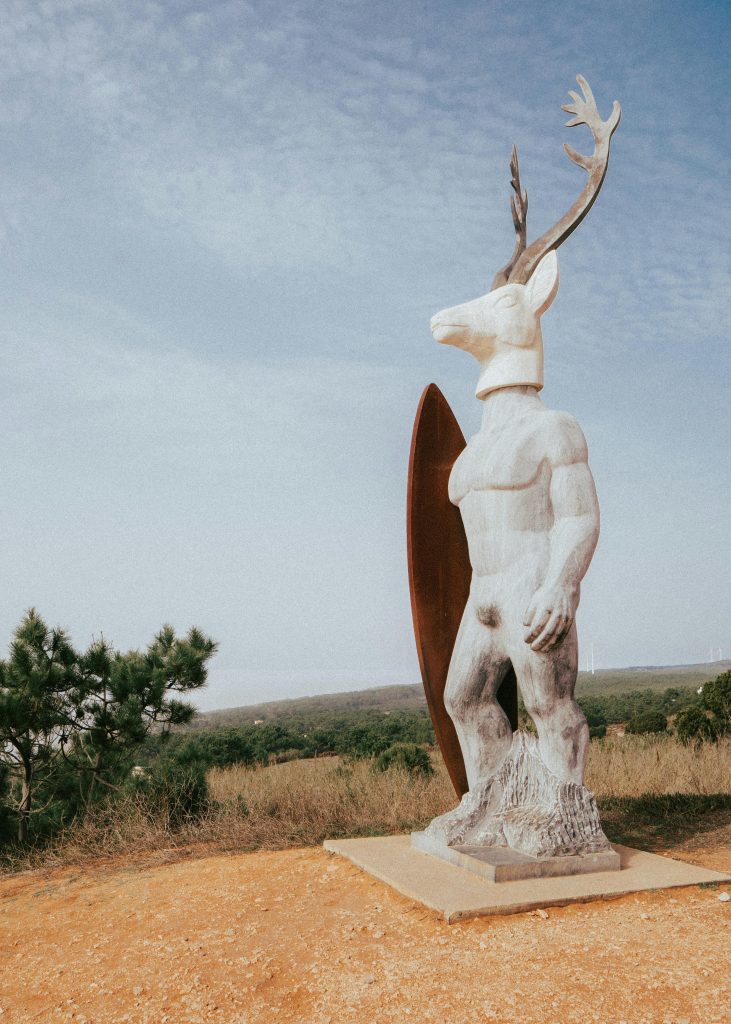
Photo by Pexels
I. Defining the Hybrid: Conceptual Foundations
Hybrid art is not merely multimedia or interdisciplinary work. It is a more radical integration where the constituent elements lose their independent identity to form a new, coherent whole—a tertium quid (a third thing). Its definition rests on several key pillars:
- Radical Integration: Unlike collage or assemblage, where elements remain discernible, hybrid art seeks a synthesis where the boundaries between, say, a living organism and a robotic system, or between a performance and a data visualization, become blurred beyond recognition. The “art” lies in the fusion itself.
- Process over Purity: Hybrid artists privilege process, research, and inquiry over the mastery of a single medium. The artistic journey often involves collaboration with scientists, engineers, programmers, or philosophers, making the studio resemble a laboratory or a workshop for experimental thought.
- Systemic Thinking: Hybrid artworks are often complex systems. They are not static objects but dynamic networks of relationships—between organic and inorganic, real-time and recorded, viewer and system. The audience frequently becomes a participant, completing a feedback loop that is integral to the work’s function.
- Post-Digital Ethos: While heavily utilizing technology, hybrid art is “post-digital” in that it no longer celebrates the digital as novel. Instead, it treats digital tools, biological material, and traditional craft as equal elements in the artistic palette, seamlessly weaving them into the fabric of experience.
II. Historical Lineage: From Gesamtkunstwerk to Cyborg
The impulse to hybridize is not new. One can trace its philosophical roots to Richard Wagner’s 19th-century concept of the Gesamtkunstwerk (total work of art), which sought to unify music, poetry, drama, and visual spectacle. The early 20th-century avant-garde movements—Dada, Surrealism, and Bauhaus—further dismantled boundaries, with figures like László Moholy-Nagy embracing technology and John Cage introducing chance operations and everyday sound into musical composition.
The mid-20th century witnessed explosive growth in hybrid practices. Fluxus events blurred art and life; Video Art (Nam June Paik) merged television, sculpture, and performance; and Performance Art (Marina Abramović) made the artist’s body and duration the medium. The pivotal development was the emergence of Bio Art in the 1990s, pioneered by artists like Eduardo Kac (with his transgenic work GFP Bunny) and SymbioticA, which integrated living tissue, bacteria, and ecological processes directly into art, forcing a confrontation with the most fundamental hybrid of all: the life itself.
These strands converged at the dawn of the 21st century, accelerated by the proliferation of digital tools, the internet, and biotechnology, giving rise to hybrid art as a defined field of practice.
III. Methodological Practices: The Artist as Alchemist
The methodology of hybrid art is its most distinctive feature. Artists become alchemists, orchestrators, and systems architects.
- Techno-Biological Fusion: This is perhaps the most provocative strand. Artists like Stelarc and The Tissue Culture & Art Project explore the interface of the human body and technology. Stelarc’s Extra Ear project—a cell-cultured human ear grown on his arm—is a literal hybrid of flesh, surgical construction, and symbolic prosthesis, questioning the future form of the human.
- Data Physicalization: Here, abstract digital information is translated into tangible, sensory form. Rafael Lozano-Hemmer creates large-scale interactive installations where heartbeats, breath, or voice modulate light and sound in architectural spaces, creating a hybrid of biometric data, participation, and immersive environment.
- Ecological and Systems Art: This practice hybridizes art with ecology, climatology, and geology. Pierre Huyghe creates complex ecosystems in gallery spaces, featuring live animals, microbes, insects, and environmental controls, where the artwork is the unstable, evolving relationship between all agents.
- Algorithmic and AI-Driven Practice: Artists like Refik Anadol use machine learning algorithms as a co-creator, training AI on vast datasets (e.g., architectural memories, nature imagery) to generate mesmerizing, fluid visualizations that are hybrids of code, data, and aesthetic intuition, often projected onto buildings, dissolving the line between virtual and physical architecture.
IV. Implications and Critical Questions
The rise of hybrid art forces a re-evaluation of core artistic and philosophical concepts.
- Authorship and Collaboration: The romantic myth of the solitary genius is untenable in hybrid art. Creation is often collaborative, distributed among specialists, raising questions about shared authorship and the role of the artist as a “director of research.”
- Audience and Participation: The viewer is frequently an activated component within the system. This shifts the artwork from being an object of contemplation to an experience of interaction, demanding new critical frameworks for analyzing aesthetic reception.
- Ethics and Responsibility: Particularly in bio-art, hybrid practice engages directly with potent ethical dilemmas: genetic manipulation, the dignity of life, and ecological intervention. The art gallery becomes a space for democratic deliberation on scientific futures.
- Materiality and Ephemerality: Hybrid works are often fragile, evolving, or dependent on obsolete technology. This challenges the art market’s demand for stable, collectible commodities and pushes museums to become stewards of live processes and software, not just conservators of objects.
- The Demise of Medium-Specificity: Clement Greenberg’s modernist demand for purity and focus on a medium’s essential properties is rendered obsolete. Hybrid art celebrates contamination, arguing that the most relevant expressions of our time emerge from the cross-pollination of fields.
Conclusion: The Art of the In-Between
Hybrid art is more than a genre; it is a critical lens through which to view a world that is itself increasingly hybrid. We are biological beings enhanced by digital prosthetics, living in natural environments permeated by data networks, experiencing identities that are simultaneously physical and virtual. Hybrid art makes this condition palpable, tangible, and subject to reflection.
It does not seek to provide easy answers but to construct “thick” experiences—complex, multi-sensory, and intellectually engaging encounters that mirror the complexity of contemporary existence. By occupying the in-between spaces—between science and poetry, organism and machine, the real and the simulated—hybrid art performs a vital cultural function. It cultivates a cognitive flexibility necessary to navigate an ambiguous future, reminding us that creativity, innovation, and perhaps even understanding, flourish not in isolation, but at the fertile intersections of once-separate worlds. In its fusion, we find not confusion, but a potent new form of clarity for the 21st century.

No responses yet