
Table of Contents
A Tapestry of Time: Tracing the History of Art in Saudi Arabia
The history of art in Saudi Arabia is a rich and complex narrative that spans millennia, reflecting the crossroads of civilizations, the birthplace of Islam, and the rapid transformation into a modern nation-state. From ancient rock carvings to contemporary biennales, the artistic expression of the Arabian Peninsula has continuously evolved, shaped by the desert environment, religious values, and global cultural exchanges. This essay explores this journey, tracing the development from traditional crafts to a dynamic and globally-engaged contemporary art scene, particularly in the context of the Kingdom’s ambitious Vision 2030.
Ancient Foundations and Traditional Arts
The story of art in Saudi Arabia begins thousands of years ago, long before the establishment of the modern state. The vast deserts and mountain ranges of the peninsula serve as an open-air gallery, holding the earliest evidence of artistic expression in the region. Prehistoric inhabitants carved tribal symbols known as “wusum” and intricate rock art into the desert rocks, depicting large human and animal figures that provide a glimpse into the beliefs and daily lives of ancient societies.
A comprehensive survey conducted between 1985 and 1990 documented over a thousand such sites, revealing an evolution in style from large, monumental figures to smaller, more refined representations. Cities like al-Faw, a pre-Islamic trading hub, further demonstrate a sophisticated artistic culture through discovered sculptures and murals, some dating back to the 1st century CE, which often depicted women of high social standing.
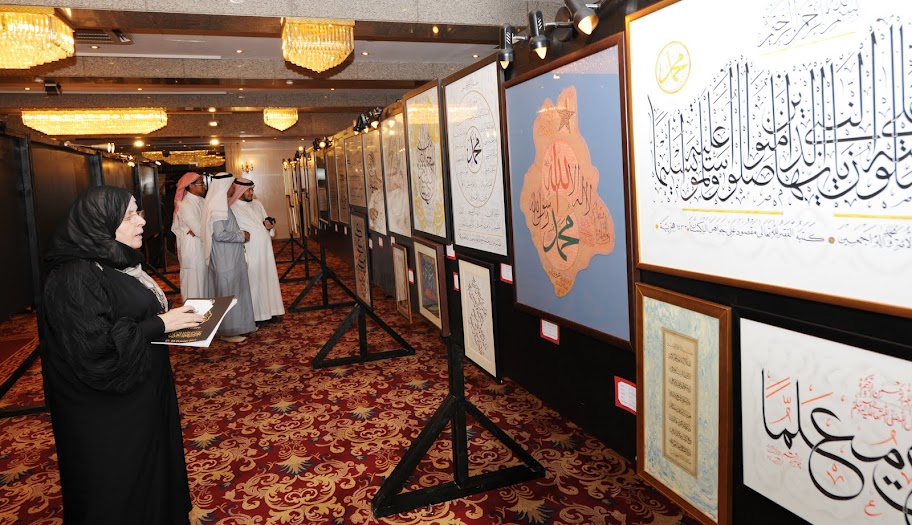
With the advent of Islam in the 7th century, artistic expression underwent a profound transformation. The focus shifted away from figurative painting and sculpture, which were associated with pre-Islamic idolatry, towards architecture, Arabic calligraphy, and the decorative arts. This period saw the birth of a visual culture deeply intertwined with faith. Arabic calligraphy, in particular, rose to prominence as the highest form of art due to its role in transcribing the Quran, the holy book of Islam. This reverence for the written word established a rich tradition passed down through generations via the Ijazah system, with master calligraphers like Sheikh Muhammad Taher Al-Kurdi leaving an indelible mark on Islamic art.
Parallel to these religiously-oriented arts, a vibrant world of traditional crafts and portable art forms flourished, deeply rooted in the nomadic Bedouin lifestyle and the region’s diverse cultural heritage. These crafts were not merely decorative but were integral to daily life, with artisans highly valued for their skill. Among the most significant of these traditions is Al-Sadu weaving, a UNESCO-listed practice where Bedouin women create geometric-patterned rugs, tents, and camel trappings using hand-dyed wool from sheep, camels, and goats.
Another remarkable tradition is Al-Qatt Al-Asiri, a form of female interior wall decoration from the Asir region in the south, which is also inscribed on UNESCO’s Intangible Cultural Heritage list. This ancient art, dating back 300 years, sees women painting the white interior walls of their homes with vibrant, spontaneous patterns of geometric shapes and symbols, a practice unique to the region.
Other crafts, such as Najdi woodwork with its decorative brass inlay, intricate Hejazi rawasheen (wooden window screens), Al-Khous palm frond weaving, and traditional silver jewellery, all contribute to a diverse and rich artistic tapestry that forms the foundation of Saudi Arabia’s cultural identity.
The Emergence of a Modern Art Movement
The mid-20th century marked a pivotal moment for art in Saudi Arabia, as the Kingdom began to establish formal state structures and its economy transformed with the discovery of oil. This period saw the gradual birth of a modern art movement, initially driven by educational reforms and the efforts of pioneering artists. The introduction of art education in public schools was a foundational step; painting and fine arts were incorporated into the boys’ curriculum in 1957 and girls’ in 1959. Early exhibitions, such as King Saud bin Abdulaziz’s inauguration of the first official art exhibition in 1958, signaled a new, state-sanctioned interest in the visual arts.
A crucial catalyst for the movement was the establishment of the Institute of Art Education in Riyadh in 1965. Created to train art teachers in the absence of dedicated fine arts academies, the institute became a crucible for the nation’s first generation of modern artists. Its faculty included prominent Arab artists like the Iraqis Shakir Hassan Al Said and Saadi Al-Ka’bi, who brought with them a deep knowledge of both local and international art movements.
The institute’s graduates, including figures like Ali AlRuzaiza, Mohammed Al-Monif, and Abdullah Hammas, went on to become leaders and educators, shaping the future of the Saudi art scene. The Youth Welfare Department and the later-founded Saudi Arabian Society of Culture and Arts (SASCA) also provided crucial support through exhibitions and awards, fostering a sense of community among artists.
The 1960s and 1970s were a formative era, defined by the pioneering spirit of artists who sought to capture a national identity in a time of rapid change. A key development was the opportunity for artists to study abroad on government scholarships. Artists like Abdul Halim Radawi, who studied at the Accademia di Belle Arti di Roma, and Mohammed Al-Saleem, who studied in Florence, returned with exposure to global modern art movements, which they synthesized with local themes and aesthetics.
This period also witnessed the groundbreaking emergence of female artists. Safeya Binzagr and Mounirah Mosly, who met while studying in Cairo, held the first-ever public exhibition by female artists at a girls’ school in Jeddah in 1968. Mosly would later become the first Saudi woman to hold solo exhibitions, using art as a form of personal and social expression. Binzagr dedicated her career to preserving the memory of a rapidly vanishing traditional Jeddah through her detailed paintings, establishing herself as a foundational figure in Saudi art. Artist-initiated spaces like the Jeddah Center for Fine Arts (1968) and Dar Al-Funoon in Riyadh (1979) further nurtured this growing community.
The expansion of the art scene was not limited to gallery walls. In 1972, Mohammed Said Farsi became the mayor of Jeddah and embarked on a visionary project to transform the city into an open-air museum. Under his leadership, the city commissioned numerous public sculptures by both Saudi and international artists, integrating art into the urban fabric and making Jeddah one of the world’s largest open-air art galleries. This era of institutional growth and individual experimentation laid the groundwork for a distinct Saudi modern art movement.
The Contemporary Renaissance: Art and Vision 2030
In the 21st century, Saudi Arabia’s art scene has experienced an unprecedented acceleration, transforming into a dynamic and globally-connected sector. This contemporary renaissance is a cornerstone of the government’s Vision 2030, a strategic framework launched in 2016 to diversify the economy, modernize society, and enhance the quality of life. Culture and the arts are central to this vision, viewed as powerful tools for economic diversification, soft power, and national identity formation on the world stage.
This new era has been marked by the creation of massive cultural infrastructure and world-class events. The Diriyah Biennale Foundation was established to oversee major exhibitions, including the Diriyah Contemporary Art Biennale, whose 2026 edition, titled In Interludes and Transitions, showcased over 70 artists in the JAX District of Riyadh, exploring themes of movement, processions, and cultural transmission rooted in the region’s nomadic history.
The Islamic Arts Biennale in Jeddah similarly provides a platform for re-examining Islamic artistic heritage in a contemporary context. In the ancient city of AlUla, initiatives like the Desert X AlUlla open-air exhibition invite international and Saudi artists to create site-specific works that engage with the stunning desert landscape, while plans for a new AlUla Museum of Contemporary Art signal a long-term commitment to cultural development.
Concurrent with this institutional growth, there is a concerted effort to research, preserve, and celebrate the Kingdom’s own modern art history. In 2026, the National Museum in Riyadh hosted Beginnings of Saudi Art Movement, a landmark exhibition featuring over 250 works by 73 pioneering artists from the 1960s to the 1980s. This research-driven project by the Visual Arts Commission (VAC) aims to document and canonize the figures who laid the foundation for today’s scene before first-hand accounts are lost. The market has followed suit, with international auction houses like Sotheby’s holding sales in the Kingdom, where works by modern masters like Safeya Binzagr have achieved record prices, reflecting a growing collector base and a validation of this artistic heritage.
The work of contemporary Saudi artists reflects a wide range of practices and concerns. Artists like Muhannad Shono, who represented Saudi Arabia at the Venice Biennale, create immersive installations that grapple with themes of language, absence, and materiality. Manal AlDowayan, another leading voice, uses photography and installation to explore the role of women in Saudi society.
The 2026 Diriyah Biennale featured a new generation of artists whose work engages with complex ideas. Nouf Al-Harthi presented a performance based on the marine bacteria that may have given the Red Sea its name, while Ahaad Alamoudi showed a film reflecting on land and narrative in the futuristic development of NEOM. Ramy Alqthami’s work used a concrete land marker to explore themes of ownership and governance. This diversity of practice demonstrates a mature and confident art scene, deeply engaged with both local specificities and global contemporary discourse.
Conclusion
The history of art in Saudi Arabia is a testament to a culture in constant, dynamic motion. From the ancient rock art of nomadic peoples and the profound spiritual influence of Islam to the emergence of a modern art movement in the mid-20th century and the explosive growth of a contemporary scene today, artistic expression has been a constant companion to social and political change.
The journey from the traditional crafts of the Bedouin and the intricate wall paintings of Asiri women to the internationally-recognized installations of contemporary artists at the Diriyah Biennale reflects a nation’s journey of self-discovery and reinvention. Today, as the Kingdom invests heavily in culture as a pillar of its future, its art scene not only serves as a mirror to its own transformation but also as a vital platform for dialogue with the world, building on a rich and ancient creative legacy.

No responses yet